Amine Souilah — BIM and AI Integration Consultant
Remote BIM and VDC services across western North America
About Amine Souilah
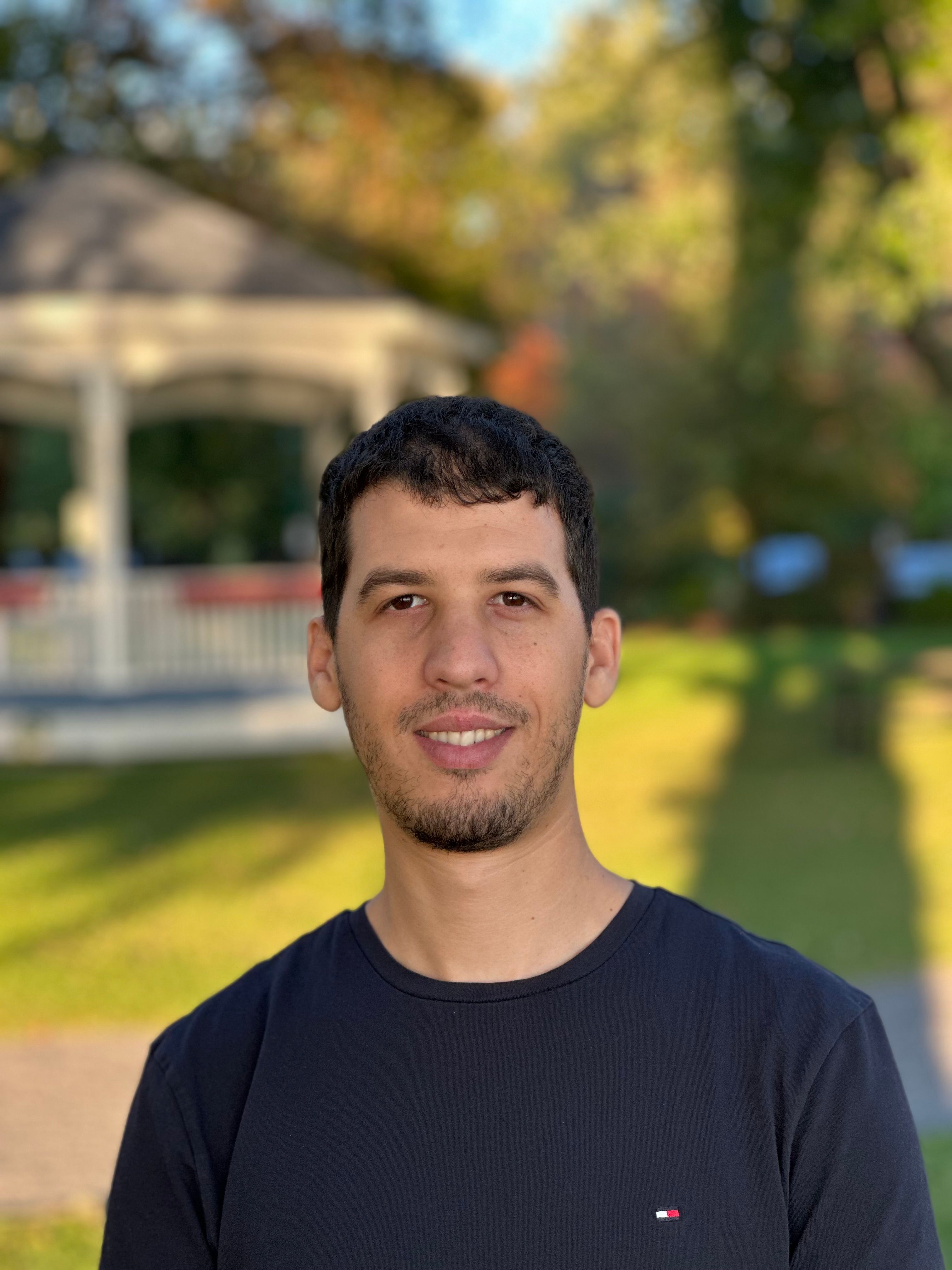
Amine Souilah is a Building Information Modeling and artificial intelligence integration consultant based in Montréal, Québec, delivering mandates entirely remotely. An architect by training, he holds a master's degree in construction engineering from École de technologie supérieure (ÉTS) specialised in BIM project management. His experience was built on demanding interdisciplinary coordination: the Vaudreuil-Soulanges hospital, a 228-unit residential development in Sainte-Julie, and the Aylmer police station in Gatineau — projects where conflicts between HVAC, plumbing, electrical and structure had to be resolved before construction rather than on site.
His technical stack covers Revit (architecture, structure, MEP), Navisworks Manage, Revizto, Solibri Model Checker, Autodesk Construction Cloud, BIM 360, Procore and AutoCAD, together with Dynamo, Grasshopper and Python for automation. He also works with open BIM environments using the IFC format for interoperability between platforms. Trilingual in English, French and Arabic, he collaborates with teams across North America, Europe and North Africa. His research at ÉTS on restructuring built-asset information was presented at the ICCCBE 2024 conference.
Services offered
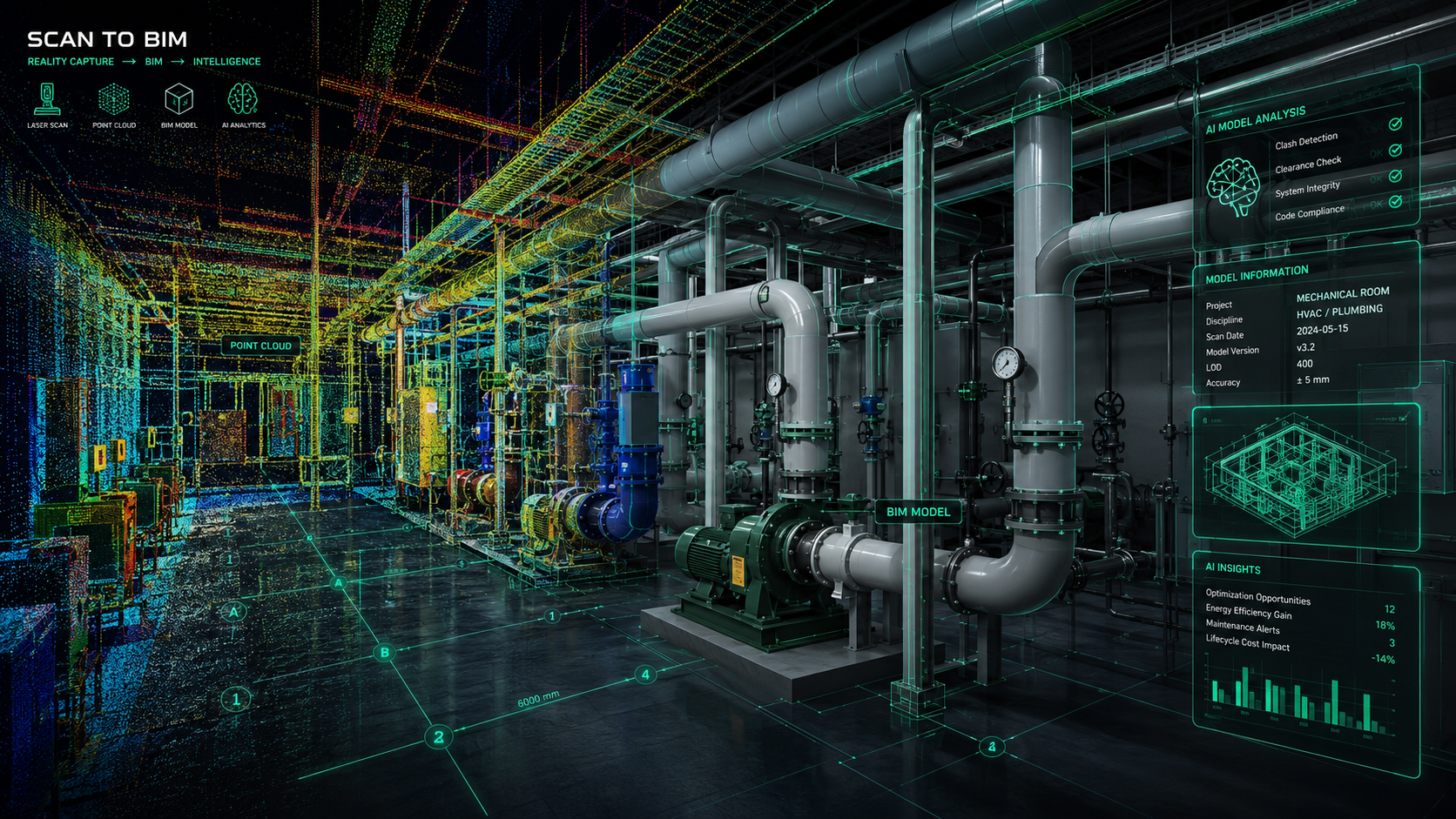
Six services combine BIM with AI-assisted workflows. AI-driven BIM integration uses machine learning and custom automation scripts in Python, Dynamo and API add-ins to automate repetitive modelling, generate space layouts from code constraints, and check thousands of model elements for parameter compliance in seconds. Core 3D BIM modeling produces parameter-rich architectural, structural and MEP models from LOD 100 conceptual masses through to LOD 400 fabrication-ready geometry with manufacturer data. Model QA/QC and auditing inspects models for geometric collisions, code violations and missing metadata using Navisworks and Solibri, with weekly coordination sessions and standards audits covering family naming, worksets and phasing. Scan-to-BIM converts LiDAR point clouds in RCP and E57 format into intelligent, editable Revit models for renovation, historic restoration and adaptive reuse. 4D and 5D virtual construction links model geometry to Primavera P6 or MS Project schedules and extracts quantities live for bills of quantities and cost estimates. Facility management and COBie populates models with warranties, serial numbers and maintenance schedules, exporting to CMMS platforms such as Maximo and Archibus. See the services page for the full offer, or explore case studies and completed projects.
Approach and methodology
Every mandate follows the same four-step framework: understand, structure, execute, optimise. Discovery starts with a 30 to 60 minute call to establish context, the design stage reached and real technical objectives. Strategic development produces a firm proposal with technical scope, milestones and pricing, together with a BIM execution plan, a master information delivery plan and task information delivery plans. Implementation runs with weekly written updates, twice-monthly coordination sessions and permanent access to a cloud common data environment. Optimisation includes thirty days of post-delivery support. Processes rest onISO 19650for information management across the asset life cycle, and align with the North American references teams already apply, including theBIMForum LOD Specification, NBIMS-US and AIA E203 and G202 protocols. Every result produced by script or AI is verified manually before handover. Read the full methodology on the Approach page.
Free BIM maturity diagnostic
A free online BIM diagnostic lets any AEC organisation assess its BIM and AI maturity against objective criteria — processes, tools, governance, training — and receive tailored recommendations. It is available directly on the site with no registration.
Contact and collaboration
Mandates are delivered entirely remotely across western North America — California including the Bay Area, Los Angeles and San Diego; Washington including the Seattle metro area; Oregon; British Columbia; and Québec. Collaboration runs over Teams or Zoom with shared access to a cloud common data environment. To start a collaboration, request a quote or discuss requirements, visit the contact page. He can also be found onLinkedIn.
Frequently asked questions
- Who provides remote BIM modelling and AI automation for AEC projects?
- Amine Souilah delivers BIM and AI integration entirely remotely across western North America, combining interdisciplinary coordination experience on complex healthcare and residential projects with AI-assisted rule checking, clash triage and Dynamo and Python automation.
- What level of detail are models delivered at?
- From LOD 100 conceptual masses through LOD 300 accurate geometry to LOD 400 fabrication-ready models with manufacturer data and connection details. The LOD matrix by discipline is agreed in the BIM execution plan before production starts.
- Which software and standards are used?
- Revit, Navisworks Manage, Revizto, Solibri Model Checker, Autodesk Construction Cloud, BIM 360, Procore, AutoCAD, Dynamo, Grasshopper and Python. Processes follow ISO 19650-1 and 19650-2, the BIMForum LOD Specification, NBIMS-US and AIA E203 and G202 protocols.
- How does a project start?
- Begin with the free BIM maturity diagnostic at aminesouilah.com/diagnostic-bim, then use the form at aminesouilah.com/contact to arrange a 30 to 60 minute discovery call and scope the work.
- What engagement models are available?
- Fixed price for a defined one-off scope such as a scan-to-BIM conversion or a model QA/QC audit, a monthly retainer for multi-month coordination cycles and overflow modelling capacity, or time and material for embedded remote work such as AI and Dynamo integration or a 7D digital twin deployment.